
Why Does My Makeup Look Patchy? Causes & Easy Fixes (2026)

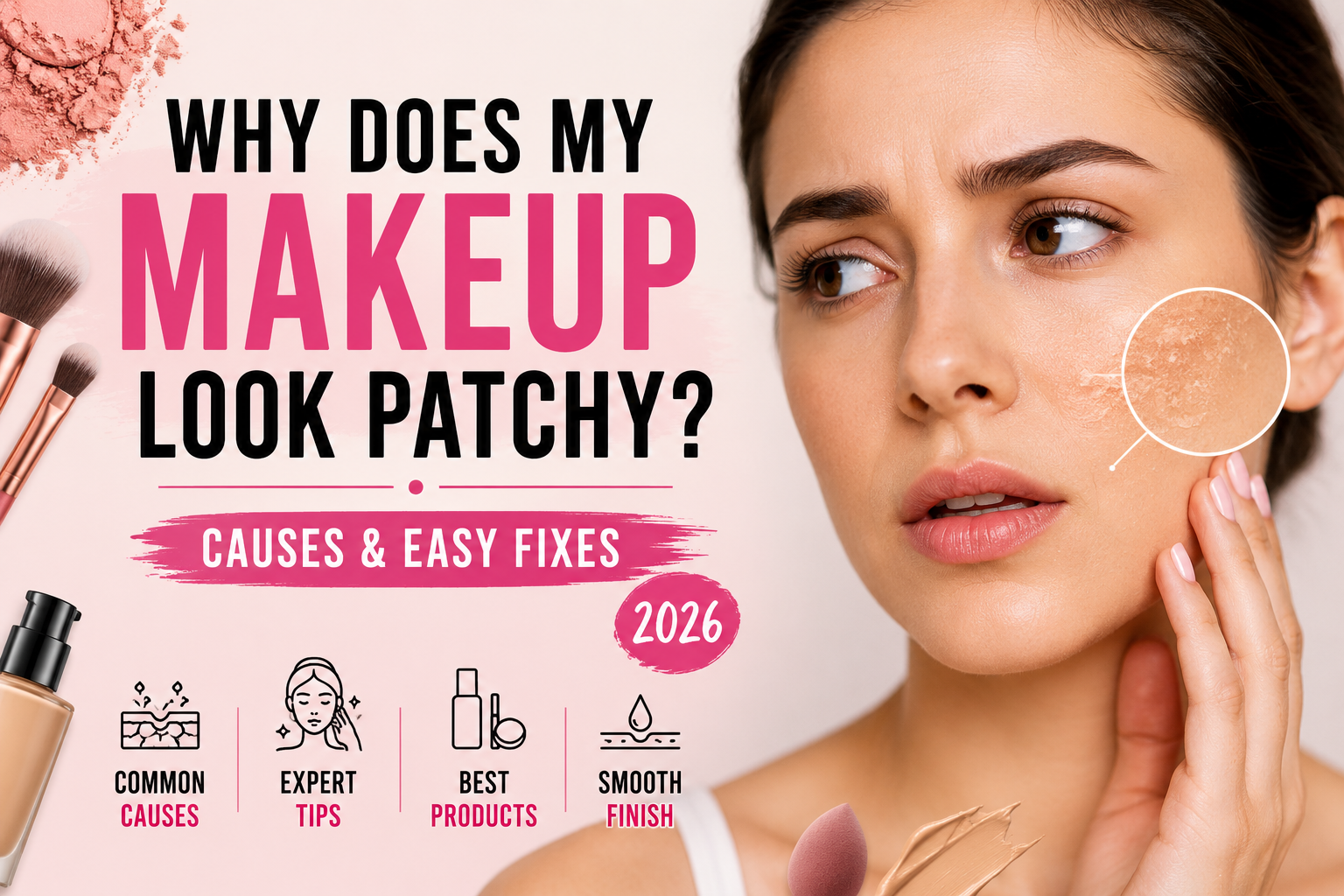
If you've ever noticed your foundation looking uneven, cakey, or flaky, you're not alone. Patchy makeup is a common beauty concern that can affect anyone, regardless of skin type. Factors such as dry skin, lack of exfoliation, using the wrong primer, applying too much powder, or choosing an unsuitable foundation can all contribute to an uneven makeup finish. This guide explains the most common reasons why makeup looks patchy and provides simple, practical solutions to help you achieve smoother-looking skin. You'll learn how proper skincare preparation, hydration, product compatibility, and application techniques can make a significant difference in the way your makeup wears throughout the day. Whether you're a beginner or an experienced makeup lover, these tips can help improve your makeup routine and prevent patchiness before it starts. Plus, we'll share recommended products and easy makeup prep steps that can help create a flawless base for foundation. By understanding the root causes of patchy makeup, you can enjoy a more natural, even, and long-lasting finish every day.
Introduction

Have you ever spent time applying your makeup only to notice that your foundation looks uneven, cakey, or patchy after a few hours? Patchy makeup is a common problem that can affect all skin types, whether you have dry, oily, or combination skin. The good news is that most causes of patchy makeup are easy to identify and fix.In this guide, we'll explain why your makeup may look patchy and share practical tips to help you achieve a smooth, flawless finish every time.

What Does Patchy Makeup Mean?

Patchy makeup occurs when foundation, concealer, or other complexion products do not blend evenly into the skin. Instead of creating a smooth finish, makeup may cling to dry patches, separate around the nose, settle into fine lines, or appear streaky.

Top Reasons Your Makeup Looks Patchy

1. Dry Skin

Dry skin is one of the most common reasons makeup appears patchy. Foundation tends to cling to flaky areas, making them more visible.

How to Fix It:

  • Use a hydrating moisturizer before makeup.
  • Apply a moisturizing primer.
  • Choose a dewy or hydrating foundation.

2. Lack of Exfoliation

Dead skin cells can create a rough surface that prevents makeup from applying evenly.

How to Fix It:

  • Exfoliate 1–2 times per week.
  • Use gentle chemical exfoliants suitable for your skin type.
  • Avoid over-exfoliating, which can cause irritation.

3. Using the Wrong Primer

Not all primers work well with every skin type or foundation formula.

How to Fix It:

  • Use hydrating primers for dry skin.
  • Use pore-blurring or mattifying primers for oily skin.
  • Match your primer to your foundation’s finish.

4. Applying Too Much Powder

Excess powder can make makeup look cakey and uneven.

How to Fix It:

  • Apply powder only where needed.
  • Use a light hand.
  • Finish with a setting spray to remove a powdery appearance.

5. Mixing Incompatible Products

Water-based and silicone-based products may not always work well together, causing separation and patchiness.

How to Fix It:

  • Check ingredient lists.
  • Pair water-based products with water-based formulas.
  • Pair silicone-based products with silicone-based formulas.

6. Poor Foundation Match

The wrong foundation formula can emphasize texture and dryness.

How to Fix It:

  • Choose a formula designed for your skin type.
  • Test foundations in natural light.
  • Avoid overly matte formulas if you have dry skin.

7. Applying Makeup on Unprepared Skin

Skipping skincare can lead to uneven application.

How to Fix It:

  • Cleanse your face.
  • Apply moisturizer.
  • Use sunscreen during the day.
  • Allow products to absorb before applying makeup.

How to Fix Patchy Makeup

If your makeup already looks patchy, try these quick fixes:

  • Press a damp makeup sponge over the affected area.
  • Apply a small amount of hydrating mist.
  • Remove excess powder with a clean brush.
  • Blend foundation gently rather than adding more product.
  • Touch up only the specific area instead of reapplying makeup everywhere.

Best Products to Prevent Patchiness

Hydrating Moisturizers

  • Cetaphil Moisturizing Cream
  • Neutrogena Hydro Boost Water Gel
  • Simple Replenishing Rich Moisturizer

Makeup Primers

  • e.l.f. Power Grip Primer
  • Maybelline Fit Me Primer
  • Colorbar Perfect Match Primer

Foundations

  • L’Oréal Paris True Match Foundation
  • Maybelline Fit Me Dewy + Smooth
  • Lakmé Absolute Skin Natural Mousse

Setting Sprays

  • Swiss Beauty Makeup Fixer
  • Makeup Revolution Superfix Mist
  • e.l.f. Stay All Night Setting Mist

Quick Makeup Prep Routine

  1. Cleanse your face.
  2. Apply moisturizer.
  3. Use sunscreen.
  4. Wait 5–10 minutes.
  5. Apply primer.
  6. Use foundation in thin layers.
  7. Blend with a damp sponge.
  8. Set lightly with powder.
  9. Finish with setting spray.

                                                                                                           Comparison Table

ProblemMain CauseQuick Fix
Foundation clings to skinDry patchesUse moisturizer
Makeup separatesProduct incompatibilityMatch formulas
Makeup looks cakeyToo much powderUse less powder
Uneven finishDead skin buildupExfoliate weekly
Foundation cracksDehydrated skinHydrating skincare

FAQs

Why does my makeup look patchy after a few hours?

This is often caused by dry skin, excess oil production, or incompatible products separating throughout the day.

Can primer stop patchy makeup?

Yes, the right primer can create a smoother base and help foundation adhere evenly.

Why does foundation look patchy around my nose?

This area tends to produce more oil and can cause foundation to separate more quickly.

Does exfoliating help makeup look smoother?

Yes. Gentle exfoliation removes dead skin cells and improves makeup application.

Conclusion

Patchy makeup is usually a sign that your skin preparation, product selection, or application technique needs adjustment. By focusing on hydration, proper exfoliation, compatible products, and lightweight application, you can achieve a smoother and longer-lasting makeup finish. Small changes in your routine often make the biggest difference.